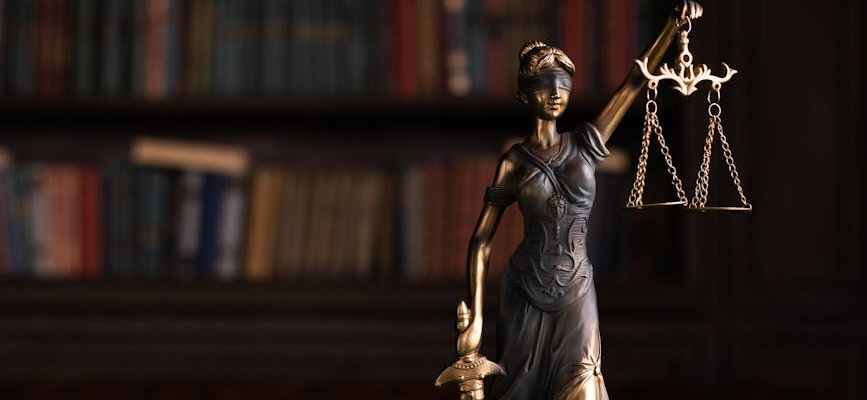
In recent years, the number of demands that books be removed from both public and school libraries have surged an enormous amount. “Book Bans,” also referred to as targeted book removals, involve specific literature and material being removed from a public institution, most commonly from school and public libraries. The implications of this movement greatly infringe on the First Amendment rights of all Americans and their ability to exercise their intellectual freedoms. Book bans have become so widespread and volatile that major book publishers, ALA (American Library Association) and nearly every public library in the country have taken a stand to fight them, even under threats of bombing and violence. Unfortunately, loose book ban removal procedures, especially at the school level, allow unnecessary and discriminatory banning, especially when most material demanded to be removed targets minorities and LGBTQ+. As book bans continue to trend, all public and school libraries should continue fighting against them, by developing a uniform and detailed book removal process.
Proposition: Government-funded libraries should fight against book bans by developing a uniform, thoughtful, and detailed book removal process.
Type of Organization: Problem/Solution
Case Outline:
I. Within recent years, book bans have spiked across public and school libraries.
A. 18,159 documented book bans have been attempted since April 16th of 2023 (3), with a total of 4,009 being banned from schools/public libraries (4).
B. Over the 2023-2024 school year, a record breaking 200% increase of successful book bans took place (12).
C. The year 2022 saw the most amount of book ban attempts in American history, double that of 2021 (15).
II. There is a disproportionate number of bans targeting stories of people of color and LGBTQ+.
A. Dr. Magnusson’s Database of Book Bans and Challenges states that 1,900 individual books were targeted for bans (5), nearly all topics centered around people of colors, LGBTQ, and religion (2).
B. In recent years of book banning, books are typically challenged for having inappropriate or sexual content, according to PEN America. More than 41 percent of books featured LGBTQ+ characters and stories (13), aligning with conservative and right-winged values (10).
C. Moms for Liberty, one of the many right-winged interest groups involved in book banning, actively fight to have material removed from all forms of government-funded libraries, stating that their parental rights are being infringed upon by having such books available to the public (10).
i. In 2023, members of organized groups and chapters such as Moms for Liberty focused on both public and school libraries, increasing attempted books bans by 92% since 2022, accounting for about 46% of all book challenges in 2023.
III. Book Bans in both public and school libraires are unconstitutional.
A. Suppressing the specifically targeted stories violates equal protection of those members of society.
i. Equal Protection clause prohibits discrimination based on defined and protected characteristics, and removing these stories sends a message that their experiences are not worthy of inclusion. Equal protection clauses (Part of the 14th Amendment) states: “the government cannot deny any person equal protection under the law.” This has been applied to voting rights, school segregation, and First Amendment infringement (16).
B. American citizens have the right to exercise intellectual freedom and cannot be suppressed simply because of disagreement on the speech.
i. In Island Trees School District v. Pico by Pico, 457 U.S. 853 (1982), school boards had limited rights to remove books based solely on disagreement with the material (9).
ii. As stated by Erznonik v City of Jacksonville, 422 U.S 205, 212-14 (1975, in context of nudity on movie screen), “Speech cannot be suppressed solely to protect the young from ideas or images that a legislative body thinks unsuitable for them.” (8)
iii. The United States v. One Book Called Ulysses (1920) began a new and legally sound interpretation of the first amendment, stating that it is a constitutional right and intellectual freedom to read whatever any person may like (17).
iv. The First Amendment grants students the rights to “receive information” at school libraries which are considered vital spaces to promote free inquiry and self-education: “Public schools exist in a special constitutional zone in which students and others have a limited right to free expression. Libraries play a special role within that zone, it is argued, as a place devoted to free inquiry, where students have asserted a right to receive information.” (6)
C. Many book removal policies in schools are too vague and do not clearly define what material actually poses harm or an attack on parental and intellectual freedoms of the students, which in turn leads to careless measures on removing valuable material (9).
i. Real-life examples have been prohibiting “sexual conduct,” which had led to the removal of dictionaries for defining “sexual intercourse” (9), potty training books, anatomy books, historical books featuring nudity in paintings, and books about puberty, all done in Huntington Beach California Library (12).
IV. School libraries should mimic public libraries in their book removal process and in their mission of intellectual freedom.
A. In a response to the Holocaust, on June 25th, 1953 the United States enacted the Freedom to Read Statement, which all librarians and their institutions adhere to as their governmental responsibility, stating the following:
i. “It is in the public interest for publishers and librarians to make available the widest diversity of views and expressions, including those that are unorthodox, unpopular, or considered dangerous by the majority.” (3)
ii. “It is the responsibility of publishers and librarians, as guardians of the people’s freedom to read, to contest encroachments upon that freedom by individuals or groups seeking to impose their own standards or tastes upon the community at large; and by the government whenever it seeks to reduce or deny public access to public information.” (3)
iii. “Publishers, librarians, and booksellers do not need to endorse every idea or presentation they make available. It would conflict with the public interest for them to establish their own political, moral, or aesthetic views as a standard for determining what should be published or circulated.” (3)
B. Public libraries already have a system in place for weeding and reconsidering books, which is an extremely critical and heavy responsibility that all staff participate in. These librarians have an annual process of weeding and adding books, which include various departments and people involved to keep decisions neutral. This is an ongoing and yearly process that is both in depth and meticulous on every subject and book title (2).
V. The United States has a federal responsibility to promote student achievement in education, regardless of state rights, by fostering an environment for global competitiveness and equal access for all diverse students.
A. The Secretary and the Department work nationally to improve the education system for all students.
i. Activities of improvement include raising national and community awareness of education challenges, such as with The National Defense Education Act was the first education legislation enacted by Congress in 1958 and The Elementary and Secondary Education Act (ESEA) of 1965, which provides federal grants to enhance the quality of elementary and secondary education. (6)
ii. Brown v. Board of Education decision and subsequent Civil Rights Acts display that federal policymaking promotes diversity (15).
Annotations
[1] 22, A. B. S. (2021, April 2). The history (and present) of Banning Books in America. Literary
Hub. https://lithub.com/the-history-and-present-of-banning-books-in-america/
[2] Book ban data. American Library Association. (n.d.). https://www.ala.org/bbooks/book-ban-
data
[3] Citizen’s Guide to U.S. federal law on obscenity. Criminal Division. (2023, August 11).
https://www.justice.gov/criminal/criminal-ceos/citizens-guide-us-federal-law-obscenity
[4] Collection maintenance and weeding. ALA. (n.d.).
https://www.ala.org/tools/challengesupport/selectionpolicytoolkit/weeding#:~:text=Academic%20libraries%20frequently%20employ%20a,and%2For%20the%20library%27s%20dean.
[5] Demographics of book bans – whitepaper. Demographics of Book Bans. (n.d.).
https://www.everylibraryinstitute.org/demographics_of_book_bans
[6] Federal role in Education. U.S. Department of Education. (n.d.).
https://www.ed.gov/about/ed- overview/federal-role-in-education#:~:text=Despite%20the%20growth%20of%20the,excellence%20and%20ensuring%20equal%20access.
[7] Freedom to Read Statement. (n.d.).
https://www.ala.org/advocacy/intfreedom/freedomreadstatement
[8] Google. (n.d.). 2023 censorship attacks: Tracking book challenges and bans in america.xlsx.
Google Sheets. https://docs.google.com/spreadsheets/d/1am1vKU3MR1209AanJVqySFtRYe3IiB1k/edit?gid=479202673#gid=479202673
[9] Island trees sch. Dist. V. Pico by Pico, 457 U.S. 853 (1982). Justia Law. (n.d.).
https://supreme.justia.com/cases/federal/us/457/853/
[10] McLaren, A. R. and E. (2020a, May 26). Debate: Is banning books ever justified?. Cherwell.
https://www.cherwell.org/2020/05/26/debate-is-banning-books-ever-justified/
[11] Moms for Liberty. (2024, February 29). https://www.momsforliberty.org/about/
[12] Oliver, J. (n.d.). Libraries: Last Week Tonight with John Oliver (HBO). YouTube.
https://www.youtube.com/watch?v=42xZB80sZaI
[13] Nearly 200 percent surge in school book bans during 2023-2024 school year. PEN America.
(2024, November 1). https://pen.org/press-release/nearly-200-percent-surge-in-school-book-bans-during-2023-2024-school-year/
[14] Part 1: The Federal Role in promoting school integration: Integration and equity 2.0.
American Institutes for Research. (n.d.). https://www.air.org/integration-and-equity-2-0-essays/federal-role-promoting-school-integration#:~:text=Federal%20policymaking%20is%20vital%20to,and%20subsequent%20Civil%20Rights%20Acts.
[15] Pendharkar, E. (2023, May 1). Book bans over the years, in charts. Education Week.
https://www.edweek.org/teaching-learning/book-bans-over-the-years-in-charts/2023/04
[16] Research guides: Banned books: History of book banning. History of Book Banning –
Banned Books – Research Guides at Harvard Library. (n.d.). https://guides.library.harvard.edu/c.php?g=1269000&p=9306840
[17] Ross, S. L. (n.d.). Are Book Bans Constitutional. Are Book Bans Constitutional.
https://review.law.stanford.edu/wp-content/uploads/sites/3/2024/02/Cohen-76-Stan.-L.-Rev.-317.pdf
 Audrey